CGK Is Trialling a 20-Tonne-a-Day Waste Incinerator. Nothing Changes for Your Flight
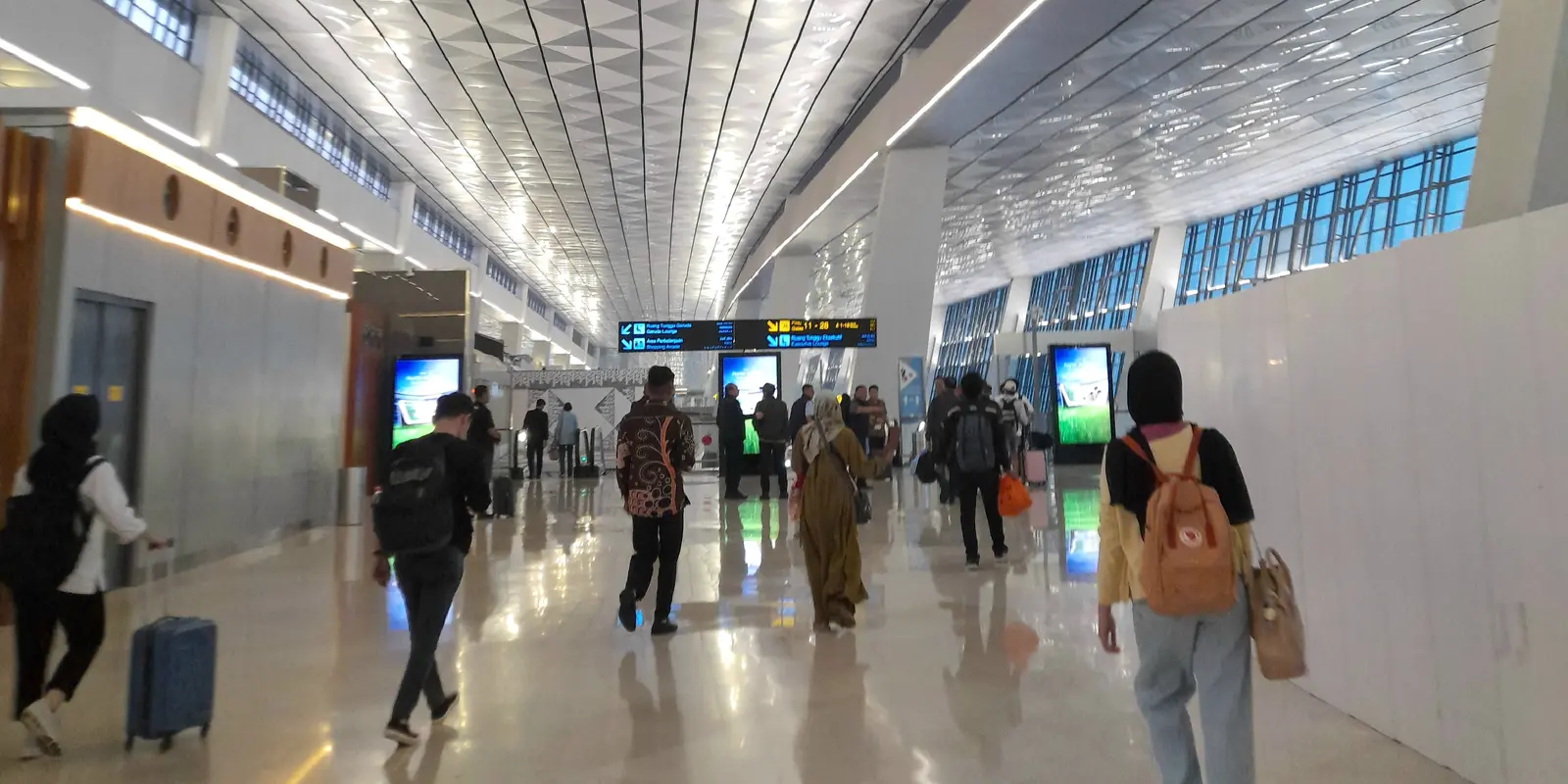
Status: a trial, running behind the terminals. Nothing for passengers to do.
Soekarno-Hatta started a Proof of Concept on Tuesday 22 September 2026 for an incinerator that can burn up to 20 tonnes of waste a day. It sits in the airport service area, not the terminals. Flights, check-in, security, bins and cleaning are unaffected, and no change to the passenger experience has been announced. Check the live departures board as usual before you travel — for entirely unrelated reasons.
If you are flying through Jakarta this week, the short version is that this story does not touch you. A machine has been switched on in the service area behind Soekarno-Hatta’s terminals, and it will burn some of the airport’s rubbish while a small group of engineers watches it. Your terminal, your gate and the bins you walk past are exactly as they were. The longer version is worth ten minutes anyway, because of what it says about an airport that just won an award for being clean, and about an argument in Indonesia over whether burning rubbish counts as dealing with it.
What actually happened on 22 September
On Tuesday 22 September 2026, three companies began a Proof of Concept at Soekarno-Hatta for an incinerator called the PARK PYRO Series, rated at up to 20 tonnes of waste a day.
The three are PT Park Tahta Berjaya, which supplies the machine; PT Angkasa Pura Indonesia, the state-owned airport operator that trades as InJourney Airports and runs CGK; and PT IAS Support Indonesia, the facilities-services arm of InJourney Aviation Services, whose staff would do the actual operating. Preparation has been under way since March 2026 — technical coordination, installing the machine, testing it, and training operators.
A Proof of Concept is not a launch. It is the step before anyone decides whether to buy the thing. “This POC process does not stop here. We will keep evaluating,” said Gani Wijaya, Deputy General Manager for Airport Facility, Equipment & Technology Services at CGK. “The hope is that applying this technology can also become one of the models for waste management at other airports in Indonesia.”
Read that carefully and you will notice what is missing. No end date for the trial. No evaluation criteria. No commitment to install the unit permanently. No cost, no contract value, no named location inside the airport estate. Those absences are not suspicious — they are normal at this stage — but they are the difference between a trial and a facility, and the headlines this week did not always make that difference clear.
Where the project actually stands
| When | What |
|---|---|
| March 2026 | PT Park Tahta Berjaya, PT Angkasa Pura Indonesia and PT IAS Support Indonesia begin technical coordination for the trial — machine installation, testing, operator training and operational preparation. |
| Before deployment | PT Sucofindo, the state-owned inspection company, measures the unit’s emissions. The companies say the results met the Indonesian emission parameters tested. |
| Tue 22 Sep 2026 | The Proof of Concept formally begins at Soekarno-Hatta in Tangerang. The specific location inside the airport estate has not been published. |
| Not announced | How long the trial runs, what the evaluation criteria are, when a result will be published, and whether the unit stays. None of this has been stated by any of the three companies. |
Twenty tonnes against how much?
This is the number that puts the story in proportion, and it is the number nobody has published recently. Soekarno-Hatta has not released a current figure for how much waste it produces.
The best recent reference point we can find is a Tempo report from November 2023 on SAI Hijau, a community waste organisation that runs a 1,000 m² sorting facility north of the runway. It described roughly 30 tonnes a day of airport domestic waste going to that site and being handled on a “zero waste to landfill” basis — sorted, with plastics compressed and sold on for recycling. Older still, a detikFinance report from 2014 put the total at 39 tonnes a day, of which 27 tonnes came off aircraft rather than from the landside areas passengers use.
Both numbers predate the passenger recovery and the Terminal 1 revitalisation, so treat them as an order of magnitude rather than a measurement. What they do establish is that a 20-tonne-a-day machine is a substantial share of CGK’s waste, not all of it, and that the airport already has a working waste stream that this would sit alongside or partly replace. Neither the airport nor the companies have said which.
The split between aircraft and landside waste matters too, because they are not the same problem. Cabin waste arriving on international flights is a biosecurity question as much as a rubbish one — food, plant and animal material surrendered at arrivals goes into quarantine bins and is destroyed by Badan Karantina officers under Article 54 of Law 21/2019, on a separate track entirely. The published material on this trial does not say which streams the unit is meant to take. That is a real open question about what the machine would actually be for.
What the machine is
PARK PYRO is a South Korean incinerator design supplied in Indonesia by PT Park Tahta Berjaya. According to the company’s director, Anatolia Gita, waste moves through three combustion chambers in sequence before the exhaust reaches the filtration stage. “The first chamber is combustion, then it is burned again in the second and third chamber. After three burns, it goes into the filter,” Gita told ANTARA in August 2026.
The company says the unit reaches around 1,600°C, and that gas is used only to start the burn rather than to sustain it, so running costs are mostly electricity. Emissions pass through bag filters, activated carbon and a dust collector. Gita’s central technical claim is temperature: “At 1,200 degrees Celsius, it can already destroy dioxins.”
This is not the machine’s first Indonesian deployment. Two 10-tonne-a-day units run in Mataram, and one 20-tonne unit runs at Gili Trawangan, the Lombok tourist island, where it is operated by the environmental foundation FMPL. That installation is instructive in both directions. The island generates around 22 tonnes of waste a day in high season, so the unit is sized to the problem — but ANTARA reported in August 2026 that FMPL could not staff the three shifts needed to run it around the clock, which is what the 20-tonne rating assumes. The same report notes that two other, domestic-grade incinerators at the same site were shut down by the local environment agency after they produced heavy black smoke during testing.
In other words: the technology has a track record, and so does the general category of small incinerators being installed and then failing their local regulator. A trial at an airport is a reasonable way to find out which of those a given unit turns out to be.
Who is claiming what, and how much it is worth
“Zero waste, zero emission” is doing a lot of work in this week’s coverage, so it is worth separating the claims and saying where each one comes from.
| Claim | Who says it | What it is worth |
|---|---|---|
| “Zero waste, zero emission” | The three companies running the trial, in their joint announcement | A stated aspiration for the programme, not a measurement. No independent assessment of net emissions has been published. |
| Burns without producing smoke | PT Park Tahta Berjaya | Manufacturer description of the design. Invisible exhaust is not the same as clean exhaust — the pollutants of concern in incineration are mostly not visible. |
| Meets Indonesian emission limits | PT Sucofindo testing, cited by the companies | Genuine third-party testing by the standard Indonesian inspection body. The published reports do not say which pollutants were measured, at what load, or on which unit. |
| Reaches ~1,600°C; dioxins destroyed above 1,200°C | Anatolia Gita, director of PT Park Tahta Berjaya | The 1,200°C threshold is broadly consistent with incineration engineering. Whether a given unit holds that temperature in real operation, on wet mixed waste, is the harder question and is not addressed in the published material. |
| A model for other Indonesian airports | Gani Wijaya, Deputy General Manager, Airport Facility, Equipment & Technology Services, CGK | Explicitly framed as a hope, not a plan. No other airport has been named and no rollout has been funded or scheduled. |
The emissions testing deserves its own note, because it is the one genuinely independent element. PT Sucofindo is a state-owned inspection, testing and certification company and the standard body for this kind of work in Indonesia; a Sucofindo certificate is not a press release. What it certifies, though, is that measured pollutants fell within Indonesian limits on the parameters tested — a compliance result, not a finding that the machine emits nothing. The published material does not say which pollutants were measured, at what load, or on which of the installed units.
Worth knowing as context: on the same day the CGK trial began, Sucofindo also handed InJourney Airports four of its own ENSIA 2026 environmental and social innovation awards — for Padang, Banyuwangi, Solo and Balikpapan. Soekarno-Hatta was not among them. That is not a conflict, but it is a reminder of how small the circle of Indonesian institutions that certify, award and operate this kind of programme actually is.
Incineration is contested here, and that is relevant
An airport announcing a waste incinerator in Indonesia in 2026 is stepping into a live national argument, and a reader is better served knowing that than not.
The government has been expanding thermal waste-to-energy. Presidential regulations Perpres 35/2018 and 109/2025 designate waste-to-energy plants as national strategic projects, and the programme has grown from an original seven cities to a target of 30. Those are large power-generating plants rather than 20-tonne units like this one, but they set the policy weather.
The objections are consistent and come from established organisations. Aliansi Zero Waste Indonesia, citing legal researcher Fajri Fadhillah of the Indonesian Center for Environmental Law, argues that incinerators release dioxins — which it calls the most toxic compounds known — along with mercury and fine particulates, and that the ash they leave behind is classified as hazardous (B3) waste that then has to be disposed of at extra cost. WALHI campaigner Wahyu Eka Styawan calls thermal waste plants a “false solution”. Yuyun Ismawati of Nexus3 has argued that residents within five kilometres of an incinerator carry elevated cancer risk.
Two of the technical objections bear directly on this trial. The first is composition: Indonesian municipal waste is dominated by wet organic food waste, which burns poorly and, critics argue, needs supplementary fuel that raises emissions. Airport waste is not identical to municipal waste — there is more packaging and more paper — but nobody has published a composition breakdown for CGK, so this cannot be resolved either way from public information.
The second is monitoring. Indonesian rules require dioxin testing only once every five years, and each sample costs roughly US$1,500–5,000. A one-off commissioning test, however competently done, tells you about the machine on the day it was tested. Whether a unit still performs that way after three years of mixed wet waste and shift-work maintenance is exactly what five-yearly testing is too infrequent to answer. If CGK does adopt this permanently, the thing worth asking about is the monitoring regime, not the commissioning certificate.
The counter-argument is not trivial either, and it is the reason trials like this happen: the realistic alternative for a lot of Indonesian waste is landfill or open burning, both of which are considerably worse than a filtered high-temperature unit. Nobody in this story is choosing between an incinerator and a perfect system.
How this connects to CGK’s cleanliness award
Five days before the trial began, Soekarno-Hatta was publicising two ACI Airport Service Quality awards, including Cleanest Airport in Asia-Pacific. The two stories are connected, but not in the way the sequencing suggests.
The ASQ cleanliness award comes from passengers rating what they can see: floors, washrooms, whether bins are overflowing at 06:00. It says nothing about what happens to the contents of those bins after the cleaning crew wheels them away. The incinerator trial is entirely about that second half, and it will not change a single thing a surveyed passenger is asked about.
If this eventually matters to travellers, it will be through the visible end of the same system: separated bins that actually lead to separated processing, sorting signage that means something, and the continued absence of overflow in the terminals. That is the honest version of “what this means for you” — a possibility, some years out, contingent on a trial nobody has yet reported the results of.
What it means for your trip
- Right now: nothing. No terminal, gate, bin, queue or flight is affected. Do not adjust anything.
- Air quality at the airport is unchanged by this. No monitoring data has been published on the trial, and no location has been released. The one measured air-quality problem at CGK this month was volcanic, not industrial — the Health Ministry found PM2.5 of 63 µg/m³ at the DAMRI bus terminal on 8–9 September 2026 after the Anak Krakatau eruption, against a 25 µg/m³ limit.
- If you separate your rubbish, keep doing it. Sorting at source is the part of any waste system that depends on passengers, and it is the part that still works whether or not the machine behind the terminals is ever bought.
- Treat a rollout to other airports as an aspiration. It was phrased as a hope by the airport, not as a plan. No other airport has been named, funded or scheduled.
- Airport timelines slip. Even if the trial succeeds and the unit is bought, procurement, permitting and installation at a state-owned airport take years, not months. Nothing you can plan a trip around.
What is not known
We asked ourselves what a reader would want that the published material does not contain, and the list is longer than the story itself:
- How long the Proof of Concept runs, and against what criteria.
- Where in the airport estate the unit is installed.
- Which waste streams it takes — landside domestic waste, airside cabin waste, or both.
- What happens to the resulting ash, and whether it is being handled as hazardous (B3) waste.
- What the existing SAI Hijau sorting operation does under this arrangement, and whether anything is being displaced.
- Which pollutants Sucofindo measured, and at what operating load.
- The cost, and whether any purchase is contemplated.
None of that is hidden; it simply has not been asked publicly yet. We will update this article if any of it is answered.
FAQ
Does this affect my flight or my time in the terminal?
No. The incinerator is a trial unit in the airport service area behind the terminals. Flights, check-in, security, gates, bins and cleaning are all unchanged. Nothing about your next trip through CGK is different because of it.
Is the incinerator operating, or is this still a test?
It is a Proof of Concept, which InJourney Airports and its partners launched on Tuesday 22 September 2026. That is a supervised trial to see whether the machine, the operating procedures and the staff work in an airport setting. No end date for the trial, no evaluation result and no decision to install it permanently has been announced.
How much rubbish does Soekarno-Hatta produce?
No current figure has been published. The most recent number we can find is from a Tempo report in November 2023, which put about 30 tonnes a day of airport domestic waste going to a sorting facility north of the runway. An older detikFinance report from 2014 gave 39 tonnes a day, 27 of it from aircraft cabins. Either way, a 20-tonne-a-day machine is a meaningful share of the airport’s waste, not all of it.
What is PARK PYRO and who makes it?
It is an incinerator series supplied in Indonesia by PT Park Tahta Berjaya, using South Korean technology. Waste passes through three combustion chambers, reaching around 1,600°C according to the company, before the exhaust goes through bag filters, activated carbon and a dust collector. Gas is used to light the burn rather than to sustain it. The same model is already running at Gili Trawangan in Lombok, with two smaller 10-tonne units in Mataram.
Is “zero emission” an independently verified claim?
No. The phrase “zero waste, zero emission” comes from the companies running the trial, and describes an aspiration rather than a measured result. What has been independently tested is narrower: PT Sucofindo, the state-owned inspection company, measured the unit’s emissions against Indonesian limits and found they met the parameters tested. That is a compliance check on specific pollutants, not a finding that the machine emits nothing.
Is burning rubbish actually a good idea?
It is contested in Indonesia, which is worth knowing when you read the announcement. Groups including Aliansi Zero Waste Indonesia, WALHI and the Indonesian Center for Environmental Law object that incinerators emit dioxins, mercury and fine particulates, and leave ash classified as hazardous waste. They also point out that Indonesian rules require dioxin testing only every five years. Supporters argue modern high-temperature units with filtration destroy dioxins and are better than open burning or landfill. The government has designated waste-to-energy plants as national strategic projects under Perpres 35/2018 and 109/2025.
Will the air at the airport be worse?
There is no published monitoring data either way, and no location for the unit has been released. Nothing suggests the trial has changed outdoor air quality at CGK. The one documented air-quality problem at the airport this month came from elsewhere — Health Ministry monitoring on 8–9 September 2026 found PM2.5 of 63 µg/m³ at the DAMRI bus terminal after the Anak Krakatau eruption, against a 25 µg/m³ safe limit.
Will passengers ever see anything change?
Possibly, but not soon and not from this machine directly. If the trial leads to permanent on-site processing, the visible consequences would be in the terminals — separated bins, clearer sorting signage, and continued cleanliness of the kind the ACI passenger survey already rates highly. None of that has been announced, and no timeline has been given.
See also
- CGK won two ACI awards — what the cleanliness award actually measures, and what it does not.
- Anak Krakatau and the CGK closure — the airport air-quality readings referenced above.
- Terminals & services — what is actually in Terminals 1, 2 and 3.
- Live departures and live arrivals — the fastest check on your own flight.