CGK Handled 39.3 Million Passengers in Nine Months: What It Means for Your Trip
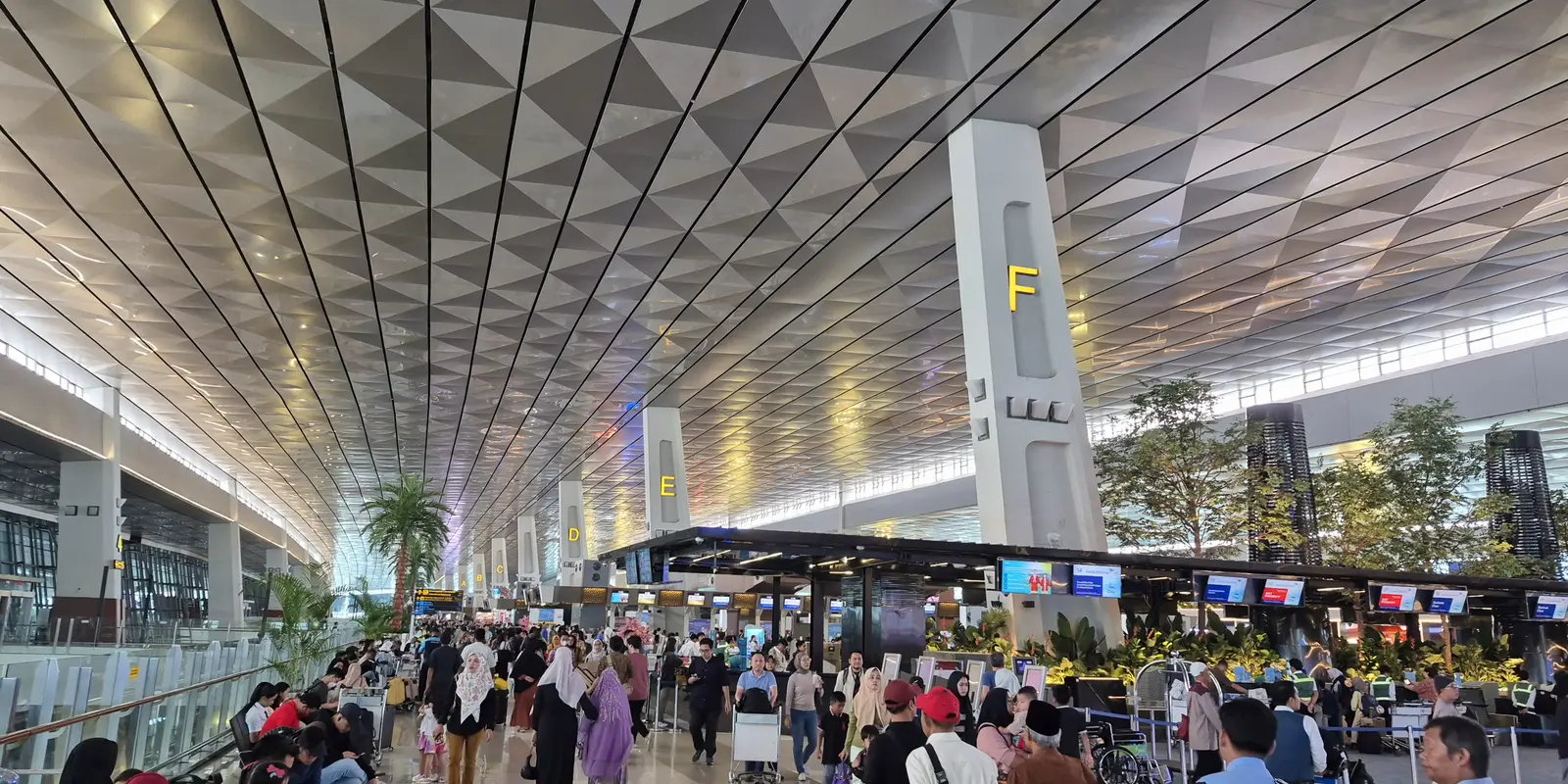
The short version: CGK is very busy, and that is all this number tells you.
Soekarno-Hatta handled 39,287,952 passengers from January to September 2026 — about 144,000 a day and nearly 1,000 take-offs and landings a day. It is a traffic count from the airport operator, not a punctuality or service rating, and nothing about it changes how your flight will run. What it does mean: allow at least two hours before a domestic flight and three before an international one, plus generous road time, and check your flight on the live departures board before you leave.
On Wednesday 21 October 2026, Soekarno-Hatta’s operator said the airport had served 39.29 million passengers in the first nine months of the year. Indonesian outlets reported it as a sign of rising air travel. The figure is accurate and it is large, but it is a total of people moving through the building, nothing more. Here is what it shows, what it leaves out, and what it means if you are flying through CGK in the coming weeks.
The numbers, quarter by quarter
The statement came from Heru Karyadi, general manager of Soekarno-Hatta, which is run by PT Angkasa Pura Indonesia under the InJourney Airports brand. It gave the nine-month total and the third-quarter figures. The first-quarter figures are from the airport’s April 2026 statement; the second quarter is as given in this one. The three add up exactly to the published total, for passengers and for aircraft movements.
| Period (2026) | Passengers | Per day, average | Aircraft movements | Note |
|---|---|---|---|---|
| Q1 (Jan–Mar) | 13,492,421 | ≈ 150,000 | 92,710 | Up 5.5% on Q1 2025 (12,783,331). Includes the Lebaran peak. |
| Q2 (Apr–Jun) | 12,404,177 | ≈ 136,000 | 85,014 | No year-on-year figure given. |
| Q3 (Jul–Sep) | 13,391,354 | ≈ 146,000 | 90,476 | Up 7.96% on Q2 — a quarter-on-quarter rise, not year-on-year. |
| January–September | 39,287,952 | ≈ 144,000 | 268,200 | 26.40 million domestic, 12.88 million international. |
Per-day averages are our own calculation from the airport’s figures. Busy days run well above the average: the airport counted nearly 2 million passengers between 14 and 24 March, around Lebaran.
The airport says 75 airlines now fly from CGK to 81 domestic and 149 international destinations. About two thirds of passengers, 26.40 million, were on domestic flights.
What the growth figure does and does not say
The headline growth number, 7.96 percent, compares July–September with April–June. That is a quarter-on-quarter rise, and the second quarter was the quietest of the three. The third quarter was in fact slightly smaller than the first. (A Tempo headline gave the rise as 7.69 percent; the airport’s own passenger figures work out to 7.96 percent, as Antara and Metro TV reported.)
What the airport did not publish is a comparison with January to September 2025, so there is no way to tell from this statement whether 2026 is a record year or simply a normal one. The only year-on-year figure it has given this year is for the first quarter, which was up 5.5 percent. Our guide to Indonesia’s busiest airports puts CGK’s volume in national context: it handles more passengers than the next three Indonesian airports combined.
A traffic count, not a rating
A passenger total says how many people used the airport. It does not say how long they queued, whether their flights left on time, or how they rated the experience. Those are measured elsewhere, and the picture there is mixed.
- Punctuality. 2026 has been a hard year for flight reliability at CGK, mostly for reasons outside the terminal. Anak Krakatau’s eruption closed the airport for two days in September, and forest-fire haze has cancelled flights to destinations in Kalimantan, Sumatra and eastern Indonesia — most recently two flights on 16 October. Our live on-time tracker shows how each airline is doing.
- Passenger satisfaction. The closest independent measure is ACI’s passenger survey. CGK holds a top-band departures award for airports over 40 million passengers and a cleanliness award for 2025; our explainer on the ACI awards sets out what those do and do not cover.
What it means for your trip
Nothing in the statement changes how CGK works. But the volume is real, and the practical advice for an airport this busy holds:
- Arrive early. At least two hours before a domestic departure and three before an international one. Your airline’s check-in deadline is the one that counts, and counters close on time even when the queue is long.
- Budget for the road, not just the terminal. The drive from central Jakarta can take well over an hour at peak. Our transport guide compares the airport train, buses and taxis.
- Know your terminal before you set off. Terminals 1, 2 and 3 are far apart, and moving between them by Skytrain or shuttle adds time. See Terminals & services.
- Check in online where your airline allows it, so you only need the bag-drop queue.
- Check your destination as well as your flight. Haze is still affecting some airports outside Java this month, and Jakarta’s own air has been in the unhealthy range on some mornings. A proper mask (N95, KN95 or KF94) is worth packing; see the haze article for details.
The upgrades the airport mentioned — and where they stand
Alongside the numbers, the airport described a transformation programme covering buildings, processes and staff. None of it came with a completion date, and airport timelines routinely slip. As of this statement:
| Project | What the airport says it will do | Status | Timeline |
|---|---|---|---|
| Terminal 1A revitalisation | Capacity from 5.7 million to 10 million passengers a year | Under way; terminal operating during the work | None given |
| Terminal 3 improvements | Check-in areas, boarding lounges, extra gate seating, toilets and public facilities | Under way | None given |
| Self bag drop, bag tracking, biometric departure | Faster check-in and boarding | Described as being implemented; no terminals or airlines named | None given |
| Digital wayfinding in a smartphone app | Help passengers find their way through the terminals | Described as being implemented | None given |
“The passenger experience is not determined only by the availability of facilities,” Heru Karyadi said, adding that staff readiness and simple processes matter as much. That is a reasonable aim. For now, though, plan your trip as if none of these services will be there: carry your boarding pass and ID, expect to use a staffed check-in counter, and follow the signs rather than an app.
One upgrade that does exist is Terminal 1C, which went into full operation on 12 November 2025 after its own rebuild. Kompas reported that it took the airport’s total design capacity to about 96 million passengers a year. At this year’s pace CGK would handle a little over 50 million, but capacity is not spread evenly: some terminals and time slots are much more crowded than others.
What is not known
The airport has not published January–September 2025 figures, a per-terminal breakdown, or peak-day counts for 2026, so it is not possible to say which terminal is most crowded or whether this year is ahead of last. It has not said when Terminal 1A’s revitalisation will finish, or which terminals and airlines offer biometric boarding and self bag drop today. If those details are published, we will update this article.
FAQ
How many passengers did Soekarno-Hatta handle in 2026 so far?
39,287,952 from January to September 2026, according to the airport operator, PT Angkasa Pura Indonesia (InJourney Airports). Of those, 26.40 million were domestic and 12.88 million international. There were 268,200 aircraft movements — take-offs and landings — over the same nine months.
Is 39 million a record?
The airport has not said, and it did not publish a January–September 2025 figure to compare against. The only year-on-year comparison it has given in 2026 is for the first quarter: 13,492,421 passengers, up 5.5 percent from 12,783,331 in the first quarter of 2025. The 7.96 percent growth in the latest statement compares the third quarter of 2026 with the second quarter, not with a year earlier.
Does a high passenger count mean CGK is better or worse than before?
Neither. It is a count of people and flights, not a measure of punctuality, queues or service. Delays and cancellations at CGK in 2026 have mostly come from causes outside the terminal — volcanic ash, haze and weather. For punctuality, see our live on-time tracker; for passenger satisfaction, the ACI survey awards are the closest independent measure.
How early should I arrive at CGK?
Allow at least two hours before a domestic departure and three before an international one, and add road time generously — the drive from central Jakarta can take well over an hour at peak. Always follow your airline’s own check-in deadline, which is stricter than the airport’s general guidance. Check which terminal your flight uses before you leave: Terminals 1, 2 and 3 are far apart, and the Skytrain between them takes time.
Can I use biometric boarding or self bag drop at CGK now?
The airport lists biometric departure, self bag drop, bag tracking and digital wayfinding as services it is implementing, but its 21 October 2026 statement did not say which terminals, airlines or flights have them, or when they will be available more widely. Do not plan around them: carry your boarding pass and identity document as usual, and use a staffed counter if a kiosk is not available.
When will Terminal 1A be finished?
No completion date was given. The airport says the revitalisation of Terminal 1A is under way and will raise its capacity from 5.7 million to 10 million passengers a year. Terminal 1A is operating while the work goes on. Terminal 1C, rebuilt earlier, went into full operation on 12 November 2025.
See also
- Live departures and live arrivals — the fastest way to check whether your flight is operating.
- Indonesia’s busiest airports in 2026 — how CGK compares nationally.
- CGK’s ACI awards — what the passenger-survey honours actually measure.
- Terminals & services — what is in Terminals 1, 2 and 3.